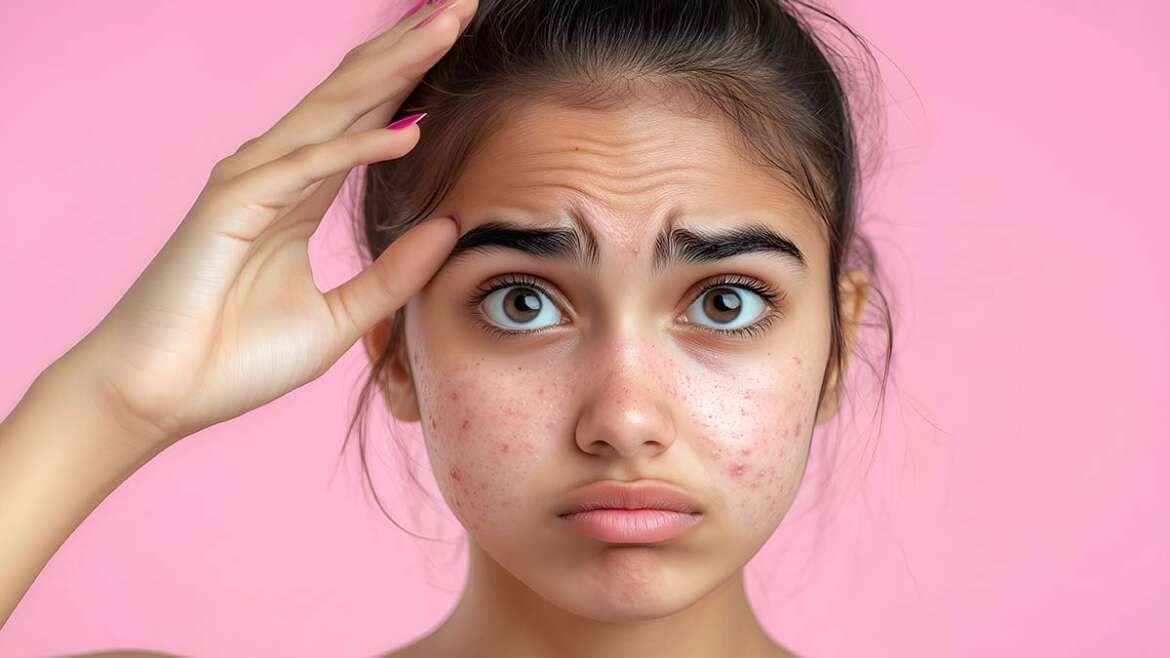
For many people, the hardest part of acne is not the acne itself. It is what it leaves behind. The breakouts finally settle, but the marks and dents stay on, and it can feel like they are there for good. The good news is that this is rarely the full picture.
This is where acne scar treatment comes in. But it begins with one distinction that changes everything: not every mark left by acne is a true scar. Some are a change in the skin’s texture, and some are only a change in its colour. Knowing which is which is the first real step.
At Dérmadent in Dwarka, Dr. Abhinav Singh, a Dental Surgeon and Medical Aesthetician & Cosmetologist with over 7 years of experience, approaches scarring by first identifying what kind of mark it actually is. The right treatment at the modern aesthetic clinic follows from the right diagnosis, not the other way around.
In this article, we will look at why acne leaves marks behind, the different types of acne scars, how they differ from pigmentation, what professional treatment actually does, and what genuinely works to improve them over time.
Why Acne Leaves Scars and Marks Behind
Acne is a form of inflammation. When a breakout stays on the surface, the skin usually recovers cleanly. But when inflammation reaches deeper, healing does not always restore the surface evenly, and that is when marks are left behind.
How Deep Acne Damages the Skin
Deeper, inflamed breakouts such as cysts and nodules disturb the collagen and structure beneath the skin. As the skin repairs itself, it may lay down too little or too much tissue, leaving a dip or a raised patch. Picking or squeezing pushes that inflammation deeper and damages more tissue, which is why it makes lasting marks far more likely.
Scars Are Not the Same as Marks
This is the distinction that matters most. A true scar is a change in texture — a dent, a pit, or a raised area you can feel, not just see. A post-acne pigmentation mark is a change in colour — a red or brown patch where the skin surface underneath is smooth and even. They look similar at a glance, but they are not the same problem.
This difference is not cosmetic hair-splitting. It decides which treatment is right, which is exactly why knowing the types matters before anything else.
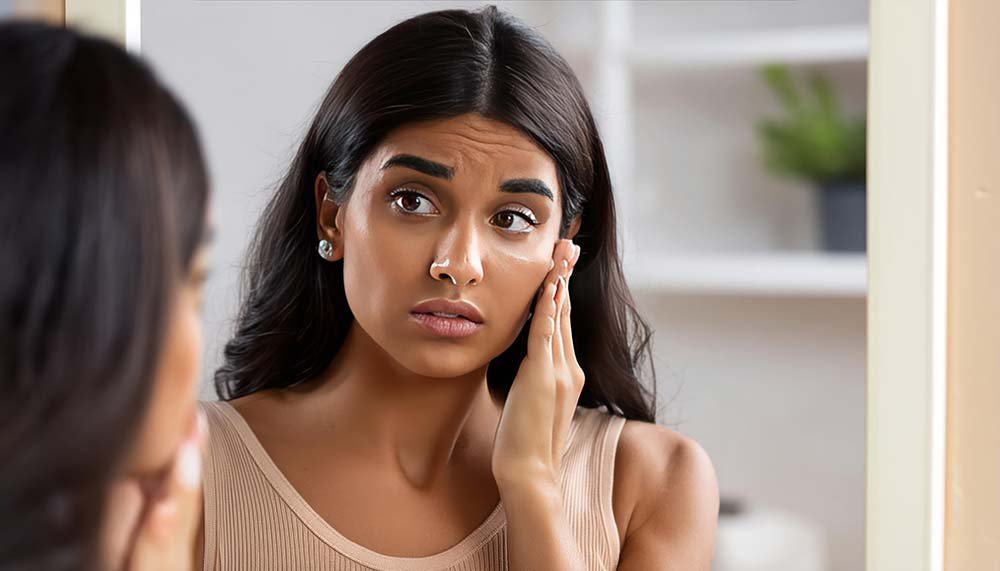
The Different Types of Acne Scars
Acne scars fall into a few recognisable types, and identifying yours is the first real step toward treating them. Most people have one main type, though mixed scarring is common too.
Textural Scars
These are the scars you can feel, not just see, because they change the surface of the skin. They tend to need professional treatment to improve. The main kinds are:
- Ice-pick scars — small, deep, narrow pits that look like tiny puncture marks
- Boxcar scars — wider depressions with clearly defined edges
- Rolling scars — shallow, wave-like dips that give the skin an uneven look
- Raised scars — thickened tissue that sits above the surrounding skin
Post-Acne Pigmentation Marks
These are flat, colour-only marks that people very often mistake for scars. The skin’s texture is normal; only its colour has changed. They are especially common and can be stubborn in Indian skin. The main kinds are:
- Red or pink marks — usually recent, and tend to fade slowly on their own
- Brown or dark marks — more common in Indian skin, and can linger for months
- Smooth to the touch — the surface is even, so only the colour needs treating
Once the type is clear, the right treatment becomes far easier to choose — which is where professional care comes in.
Professional Acne Treatment
Professional treatments are matched to the scar type rather than applied one-size-fits-all. This is the single biggest reason results differ so much between one approach and another. A treatment that works well for pigmentation may do little for a deep textural scar, and vice versa.
Why Home Remedies Often Fall Short
Over-the-counter creams and home fixes are not useless. They can help surface pigmentation fade gradually over time. But they cannot remodel textural scars that sit deeper in the skin, because those need the collagen underneath to be rebuilt. Professional treatment works at that deeper level — resurfacing the skin, stimulating new collagen, or targeting stubborn pigment — which is why it reaches problems home care simply cannot.
Which treatment is best for acne scars?
The best treatment depends on the scar type. Textural scars usually need professional resurfacing or collagen-stimulating procedures, while pigmentation marks respond better to peels and targeted care. A proper assessment decides the right approach for your skin.
Because the right choice hinges on the type of scar, a professional assessment matters far more than any single trending treatment.
What Actually Works for Lasting Results
Real improvement rarely comes from one quick fix. It comes from matching the treatment to the scar, addressing pigmentation early, and giving the skin realistic time to respond. These are the principles that make the difference.
- Match the Treatment to the Scar: Textural scars and colour marks need different approaches, so the right diagnosis always comes before any procedure.
- Address Pigmentation Early: Newer marks respond better than older, settled ones, so acting sooner usually means a shorter road.
- Give Skin Realistic Time: Collagen rebuilds gradually, so meaningful change shows over weeks and sessions, not overnight.
- Combine Approaches Where Needed: Mixed scarring often needs more than one method working together, planned in a sensible sequence.
- Choose Guidance Over Guesswork: A professional assessment prevents wasted time and money on treatments that were never suited to your scars.
Dr. Abhinav sees patients for acne and acne-scar concerns in Dwarka, and keeps it honest: results vary from person to person, and there are no guarantees.

Frequently Asked Questions
Post-acne pigmentation marks often fade slowly over time, especially newer red or pink ones. True textural scars — the dips and raised areas — usually need professional treatment to improve meaningfully, as the skin cannot rebuild that structure on its own.
It varies by scar type and skin. Most people see gradual change over several weeks to months, often across multiple sessions, because collagen rebuilds and pigment fades slowly rather than all at once.
Most procedures involve mild, manageable discomfort rather than real pain. The exact sensation depends on the treatment used, and what to expect is always discussed with you beforehand.
Conclusion
Acne scars are not all the same, and that is the most useful thing to know. Whether you are dealing with a change in texture or a change in colour decides what will actually help — and treating them as one single problem is why so many people struggle to see progress.
Clearing scars is a considered process, built on the right diagnosis and steady consistency, not a single miracle session. When the treatment fits the scar and you give it time, improvement follows far more reliably.
If post-acne marks or scarring have been bothering you, consider starting with a proper skin assessment at Dérmadent in Dwarka — a clear first step toward knowing what will genuinely work for your skin.