
dermadent.as@gmail.com

A-175, Block A, Sector 8 Dwarka, New Delhi, 110077

+91-9818787646

Sensitive Teeth: Why Your Teeth Hurt and How to Fix It

Woman experiencing sensitive teeth after drinking a glass of cold water.

For most of us, the first sign is a sudden jolt — a sip of cold water or a bite of ice cream sends a sharp sting shooting through a tooth. It fades in a second, so it is easy to shrug off. But that flinch is a signal, not a quirk, and it usually has a cause worth understanding.

This is tooth sensitivity, and in plain terms it happens when the protective layers of a tooth wear thin or the gum pulls back, exposing what lies beneath. It is common, it is manageable, and it is rarely random. Something is letting everyday triggers reach the nerve, and the discomfort is your tooth reacting to it.

At Dérmadent, Dr. Abhinav Singh, a Dental Surgeon with over 7 years of experience, treats sensitivity by finding the underlying cause rather than masking the pain. The aim is not to numb the symptom for a day, but to work out why the tooth is reacting and address that directly.

In this article, we will look at why teeth turn sensitive, what triggers the pain, how it is treated both in-clinic and at home, and how to stop it coming back.

Why Teeth Become Sensitive

Sensitivity is not really the tooth itself hurting. It is the exposed inner layer reacting to a trigger. Enamel and gums act as a protective barrier, and sensitivity is what happens when that barrier thins and the layer underneath is left uncovered.

What’s Happening Inside a Sensitive Tooth

It helps to picture a tooth as layers. On the outside is hard enamel. Beneath it sits a softer layer called dentine, and dentine is threaded with thousands of tiny channels that lead straight to the nerve. While enamel and gum cover these channels, the nerve stays protected. But when enamel wears down or the gum recedes, those channels are exposed. Hot, cold, and sweet then travel down them and reach the nerve directly, which is the sharp sensation you feel.

Common Causes of Tooth Sensitivity

The barrier breaks down for everyday reasons. Brushing too hard wears enamel and pushes gums back. Acidic foods and drinks soften enamel over time. Grinding or clenching gradually thins the biting surface. Gum recession, a cracked tooth, or a worn filling can each expose sensitive areas too. It is also worth knowing that a cavity or a gum problem can show up as sensitivity, which is exactly why the cause matters more than a quick fix.

Sensitivity, then, is a symptom with several possible sources. That is why knowing your own triggers, which we look at next, is the first step to sorting it out.

Signs and Triggers You Shouldn’t Ignore

Sensitivity usually shows up as a brief, sharp pain tied to specific triggers. Noticing the pattern early helps you catch the cause while it is still simple to treat, rather than waiting for it to settle into something bigger.

When the Pain Shows Up

A quick way to check is to notice exactly when the twinge appears. For most people it strikes in familiar moments:

  • Cold drinks or ice cream
  • Hot tea or coffee
  • Sweet or acidic foods
  • Cold air on the teeth

Warning Signs Worth a Check

Some signals point to something beyond everyday sensitivity and deserve a dentist’s look. These are reasons to get checked, not reasons to worry:

  • Pain that lingers rather than passing quickly
  • Sensitivity in one specific tooth
  • Discomfort alongside visible gum recession

Persistent or one-sided sensitivity is a cue to see a dentist. That leads into what professional treatment actually involves.

How Sensitive Teeth Are Treated

Treatment starts with finding the cause, then matching it to the right fix — from mild at-home care to professional options for more stubborn sensitivity.

  • Home care first: A soft brush, desensitising toothpaste, and easing off acidic foods settle mild, everyday sensitivity.
  • In-clinic options: Fluoride application or sealing exposed surfaces strengthens the tooth where home care cannot reach.
  • Treating the cause: When gum recession, a crack, or a cavity is behind it, addressing that directly is what lasts.

How can I stop my teeth being sensitive?

Switch to a soft brush and desensitising toothpaste, ease off acidic foods, and avoid brushing too hard. If sensitivity lingers or worsens, see a dentist to treat the underlying cause rather than just the pain.

Professional assessment is the step that turns temporary relief into a lasting fix. With the cause identified, the next question is how to keep it from returning.

How to Prevent Sensitive Teeth

Most sensitivity is preventable by protecting enamel and gums day to day. A few small habit changes keep the barrier intact and the pain away.

  • Brush Gently: A soft-bristled brush and a light hand clean effectively without wearing enamel or pushing the gums back.
  • Watch Acidic Foods: Citrus, fizzy drinks, and wine soften enamel — rinse with water after, and wait a little before brushing.
  • Address Grinding: Clenching or grinding wears teeth down over time; a night guard protects them if this is the cause.
  • Keep Up Routine Checks: Regular visits catch early enamel wear, recession, or a small cavity before it turns into sharp pain.
  • Treat the Cause, Not Just the Symptom: Reaching for sensitivity toothpaste helps, but a lasting fix means addressing whatever is exposing the nerve.

If sensitivity is frequent, one-sided, or lingering, it is worth booking a check. Dr. Abhinav sees patients for sensitivity, and keeps it honest: causes and outcomes vary from person to person, and there are no guarantees.

Conclusion

Sensitive teeth come down to one thing — the tooth’s inner layer reacting through worn enamel or receded gums. It is uncomfortable, but it usually has a cause that can be found and treated.

Prevention is mostly everyday habit. Gentle brushing, kinder food choices, and routine checks keep the protective barrier intact and stop small issues from turning sharp.

If cold sips and sweet bites have started catching you off guard, it is worth having the cause looked at properly — a small step now that can spare you the sting for good.

Frequently Asked Questions

Does tooth sensitivity go away on its own?

Mild sensitivity from a one-off, like a very cold drink, can settle by itself. But sensitivity that persists usually points to a cause worth checking, rather than something that will simply fade.

Is sensitive toothpaste enough to fix sensitive teeth?

It can ease the symptoms and is a good first step, but it manages sensitivity rather than curing it. A lasting fix depends on the underlying reason the nerve is exposed.

Can sensitive teeth be a sign of something serious?

Often it is minor and easily managed. But persistent or sharp pain in one specific tooth can signal a cavity, a crack, or a gum issue, and that is worth a dentist’s look.

Healthy Gums, Healthy Smile: Why Preventive Dental Care Matters

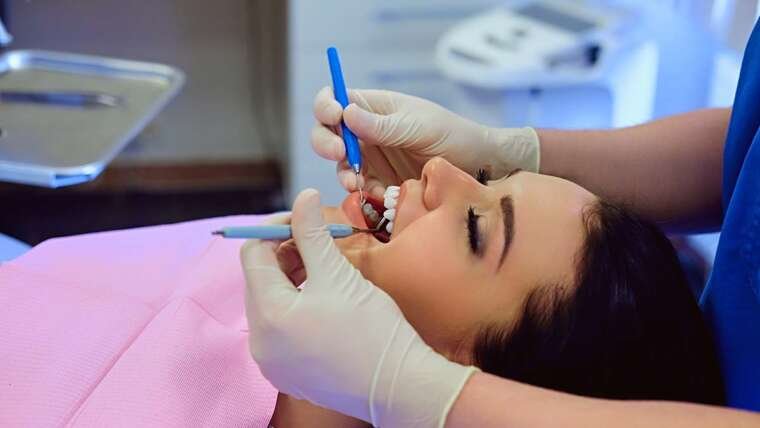
Dentist performing preventive dental checkup during routine professional teeth examination

For most of us, a dentist is someone we call only when something starts to hurt — a sharp twinge, a little bleeding, a tooth that suddenly feels sensitive. But by the time pain shows up, the trouble underneath has usually been building quietly for months. Dental problems rarely start with pain. They start long before it.

This is where preventive dental care changes things. Preventive care means looking after your teeth and gums before problems grow, not after. And it begins with one simple idea: healthy gums are the foundation of a healthy smile. A bright set of teeth means little if the gums holding them in place are quietly weakening.

At Dermadent in Dwarka, Dr. Abhinav Singh, a Dental Surgeon with over 7 years of experience, takes a prevention-first approach. Rather than waiting for a small issue to turn into a painful, costly one, the focus stays on catching things early and keeping your mouth healthy for the long run.

In this article, we will look at why gum health matters so much, the early warning signs most people miss, what a professional cleaning actually does, and the real payoff of catching problems while they are still small.

Why Gum Health Is the Foundation of a Healthy Smile

Your gums do more than frame your teeth. They hold them firmly in place. When gums weaken, even perfectly healthy teeth can become loose and unstable, which is why gum health sits at the base of everything.

The Gum–Tooth Connection

It helps to think of your gums and teeth as one system, not two separate parts. Teeth sit in the gum and bone that support them, and good oral hygiene protects both at once. This is why a smile can look bright and even on the surface and still be at risk. If the gums underneath are inflamed or pulling back, the whole structure becomes less stable over time. Healthy gums and teeth depend on each other.

How Plaque and Tartar Build Up

Every day, a soft, sticky film of bacteria called plaque forms on your teeth. Regular brushing and flossing clears most of it. But anything left behind can harden into tartar — a tougher deposit that brushing alone can no longer remove and that only a dentist can take off. As plaque and tartar build up along the gumline, they irritate the gums and can lead to early gum disease, known as gingivitis.

The tricky part is that this damage builds silently, with little to feel at first. That is exactly why the early signs in the next section are worth knowing.

Early Signs of Dental Problems You Shouldn’t Ignore

The first warnings of gum trouble are easy to miss or brush aside as normal. But noticing them early keeps treatment simple and small, and is the heart of good gum disease prevention.

Signs in Your Gums

Your gums often give the clearest clues, and a quick look in the mirror can tell you a lot. Watch for:

  • Bleeding when you brush or floss
  • Swelling, tenderness, or redness along the gumline
  • Gums that look like they are pulling back from the teeth

Signs Across Your Mouth

Other signals are easy to dismiss as everyday annoyances, but they are worth paying attention to. Keep an eye out for:

  • Persistent bad breath that does not clear with brushing
  • Sensitivity to hot or cold
  • Teeth that feel slightly loose

None of these mean you should panic. They simply mean it is worth getting checked. Any one of them is a cue to see a dentist, and often the simplest next step is a professional cleaning.

The Role of Professional Teeth Cleaning

Professional teeth cleaning removes the tartar and below-the-gum buildup that home brushing simply cannot reach. Just as importantly, the visit gives your dentist a chance to spot small issues early and, where needed, recommend gum treatment before things progress.

Why Brushing Alone Isn’t Enough

Brushing and flossing are essential, but they have limits. They clear soft plaque from the surfaces you can reach, yet they cannot remove hardened tartar or clean deep along and below the gumline. During a professional cleaning, your dentist removes that buildup, smooths the tooth surfaces, and checks the health of your gums. Most people find it quick and straightforward, and leave knowing exactly where their oral health stands.

How often should you get professional teeth cleaning?

Most dentists recommend a professional cleaning every six months to remove plaque and tartar buildup, check gum health, and catch dental concerns before they become serious.

That makes routine cleaning one of the simplest preventive habits you can keep, and it leads straight into the wider benefits of preventive care.

The Benefits of Preventive Dental Care

Preventive dental care lowers your risk, catches problems while they are still small, and helps you avoid bigger, costlier treatment later. These are the real benefits of regular dental checkups.

  • Fewer Cavities: Regular cleaning and checks remove the buildup that causes decay, so fewer teeth need fillings over time.
  • Lower Gum-Disease Risk: Catching plaque and early gum changes keeps small irritation from turning into full gum disease.
  • Early Detection: Problems are spotted while they are still minor and simple to treat, not after they have spread.
  • Stronger Long-Term Oral Health: Steady upkeep protects your teeth and gums for years, not just until the next ache.
  • Real Cost Savings: A routine checkup costs far less than the major treatment that neglect eventually forces.

As a rule of thumb, a routine check about every six months is enough for most people, sooner if any warning signs appear. Dr. Abhinav sees patients for preventive dental care in Dwarka, and keeps it honest: results vary from person to person, and there are no guarantees.

Frequently Asked Questions

Can gum disease be reversed?

In its earliest stage, known as gingivitis, gum disease can often be improved and sometimes reversed with professional cleaning and good daily care. More advanced gum disease can usually be managed and slowed, but not fully undone, which is why early attention matters.

Is professional teeth cleaning painful?

For most people, a routine cleaning is painless and feels like a thorough polish. If your gums are inflamed or sensitive, you may notice mild discomfort, but it is usually brief. Letting your dentist know beforehand helps keep you comfortable.

How long does dental scaling take?

A typical scaling and cleaning session usually takes around 30 to 45 minutes. If there is heavier tartar buildup or your gums need more attention, it may take a little longer or be split across visits.

Conclusion

Healthy gums are the foundation of a healthy smile, and looking after them early is far easier, and cheaper, than repairing damage later.

The takeaway is simple: treat preventive dental care as a habit, not a one-off. A routine check roughly every six months keeps small issues small.

If it has been a while since your last visit, consider booking a preventive checkup at Dermadent in Dwarka — a small step now that protects your smile for years to come.